
Share Elena Anastasis's obituary with others.
Invite friends and family to read the obituary and add memories.
Stay updated
We'll notify you when service details or new memories are added.
You're now following this obituary
We'll email you when there are updates.
Select your format and elements to print

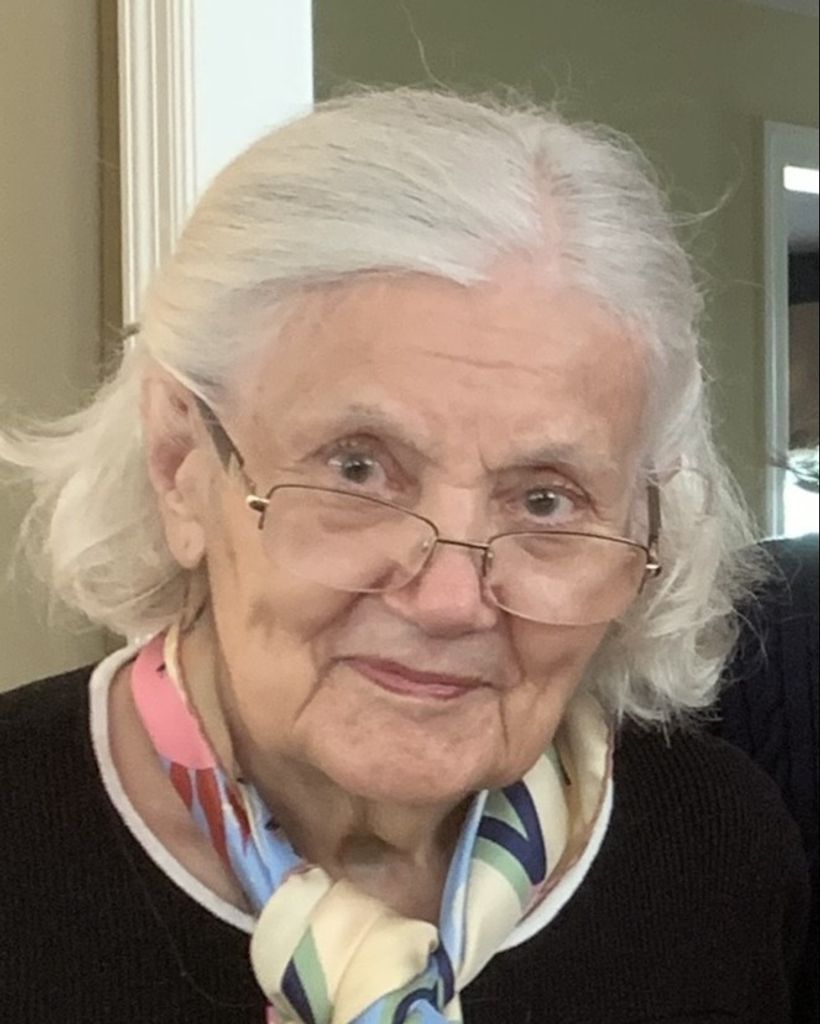


Elena Anastasis
Sep 11, 1937 — Nov 28, 2025
St. Marys
Elena Anastasis (formerly Năstase) died peacefully surrounded by her closest family and friends early in the morning of November 28, 2025 at the age of 88.
Her surviving family includes her sons Corneliu Năstase and Basarab Louis (Ashley) Anastasis; her daughters, Rosita (Rino) Orlandi, Myriam (the late Jake Avancena), Esmeralda Năstase and 13 grandchildren.
Elena was born on September 11, 1937, in Copaci, Romania – the daughter of George and Maria Georgescu. She had one older brother, Stelian (and a younger sister Lucretia who died as an infant).
Elena had a happy childhood until World War II when the scourge of the Russian takeover in 1944 would change her life forever.
The Communists began harassing landowners and farmers in 1949 due to their hatred for private property. Elena’s father soon found himself in the Soviet crosshairs for these reasons. This despite George being admired in his community for being an industrious and upstanding land owner.
The new Romanian government demanded quotas of grain, fruit, dairy, etc from all the farmers that were impossible to meet. George had to travel far distances to donate most of his crop to the state but it still wasn’t good enough.
Next, the Communists fined him multiple times as a punishment for his “insufficient” grain production. When a dry spell hit Romania causing a weak harvest, the government imprisoned George for several months causing his wife Maria to flee the area. Meanwhile, Elena’s brother Stelian was arrested briefly in Bucharest on account of his father’s imprisonment.
Because of the instability at home, in 1950 Elena’s mother sent her to live at her aunt Lucretia’s house in a far away town, Râmnicu Vâlcea. Elena was temporarily adopted and changed her last name to “Petre” to escape detection by the Communists and to be able to enroll into school in her new town.
Meanwhile, when George was eventually released from prison, his wife joined him for the bus ride home. But as Elena’s parents neared their home, a local on the bus warned them: “The Communists have seized your house and the soldiers are living there. You will be arrested if they see you there. Don’t get off at the bus stop next to your house.”
George and Maria were so afraid they didn’t even dare look in the direction of their house.
Instead, they disembarked the bus in a different part of Romania. They became nomads working odd jobs to make ends meet. They would never live in or enter their home ever again. George would become an electrical lineman and potato farmer while Maria labored at a fruit factory.
Meanwhile, while living with her aunt, Elena started working and attending school full time at the age of 13. She gave all her income to her aunt to help with their living expenses. Elena would continue working jobs outside the home until she was 82 years old.
As a teenager, she knitted and also shelled walnuts. The dust from this process damaged her lungs. Food was so scarce at home that her aunt sent Elena out to find potatoes that were missed during the main harvest. In order to do this, Elena often had to dig for long hours through very dry, hard soil.
She owned just one heavily mended dress that she had to wear all week long.
Elena’s parents ended up reuniting and living with her several years later. During her twenties, a mutual friend introduced Elena to Petre (Peter) Năstase. Peter and Elena exchanged letters for several months and quickly fell in love.
Peter was a devout Orthodox Christian (as was Elena) and patriot and was imprisoned for these beliefs. He spent a total of 10 years in prison (1949-53; 1959-64). Peter was tortured numerous times and was even beaten unconscious. He and his inmates had often lived in overcrowded cells full of feces and urine. Their standard meal was a small portion of rotten cabbage and moldy bread. At one point, Peter’s weight plummeted to 115 pounds and remained there for an extended time. He later remarked that he was nothing but “skin and bones”.
Later, Peter and Elena would announce their engagement in secret due to fear of the Communists. Marrying someone with Peter’s political background was considered taboo. Peter refused to accept the Communist Party red card which was the standard form of ID at the time. Accepting this red card implied acceptance of and submission to the Soviet platform. Still, Elena displayed courage in God’s plan and married Peter soon thereafter on May 6, 1965. A government agent masqueraded as a member of the wedding party in order to spy and report on the couple.
Elena’s parents disapproved of the marriage for the reasons just stated. They even kidnapped her soon after the wedding and took her back home, but she returned to her husband a week later.
The newlyweds struggled financially due to Peter’s political standing. They both worked as teachers full time and tutored on the side while raising four children. Elena endured an hour and a half commute on unreliable buses just to get to the school where she taught. And school during that era was Monday through Saturday. Elena taught the Romanian language at school and tutored privately in languages and literature. She also taught kindergarten at a certain point.
Peter and Elena lived their first few family years in a studio apartment flat with no bedrooms - just a mattress and pullout couch in the main living area for both parents and all four children to share.
The family’s faith provided the strength and conviction needed to persevere during such difficult times. Elena’s older children recalled that for every year of their childhood, they would attend the Easter vigil service that occurred between 10 pm and 4 am. It would then take the family two hours to walk home so they wouldn’t return home until 6 am the following morning.
For context, many Romanians were afraid to even enter a church during these times because of the government’s oppression.
On July 20, 1983, Peter and Elena started a hunger strike to force the government to grant their family exile out of the country. At one point, a friend notified the family that George H.W. Bush, United States Vice President at the time, was about to visit Romania. The friend told the Năstases that Bush had a list of Romanian human rights violations that he was going to speak to the Romanian president Nicolae Ceaușescu about and that their hunger strike situation was at the top of his list.
On the 59th day of the hunger strike, the Communists agreed to allow the family to emigrate to the United States. Peter, an avid Greek scholar, decided to change the family name from Năstase to Anastasis which means "Resurrection” in Greek. Also, Peter was convinced that their previous name “Nastase” was originally derived from “Anastasis.” Around this time, Peter and Elena joined the Roman Catholic Church.
Elena’s family (including her mother, Maria) arrived in St Louis, Missouri, greeted by a welcoming letter from President Ronald Reagan who had heard about their sufferings.
Then, to everyone's surprise, Peter (57) and Elena (47) welcomed their fifth child in 1985 - Basarab Louis. Multiple people had advised Elena to abort the baby due to concerns about her pregnancy at her advanced age.
She worked various jobs in America to help the family survive. The Communists had stripped Peter of all his degrees (doctorate in classical literature and masters in mathematics) and as a result, he had to start his career over in his late 50s.
Peter and Elena eventually moved the family to Cleveland where Peter worked as a nurse's aid and a security guard while Elena worked as a nursing home cook. Their work schedules became a necessary but heavy cross to bear; Peter often worked the graveyard shift as a security guard. Then, while he slept during the day, Elena worked as a nursing home cook.
In 1994, they moved to St Marys, KS where Peter finally received his “dream job” – teaching Latin and Classical Greek at St Mary's Academy and College.
Elena helped teach first grade at the Academy for several years. Then she transitioned to a job at the Academy library where she worked until 2020. Elena was beloved by her coworkers and was known for her kindness by the thousands of students that came through the library doors during her tenure there - even when she notified them about an overdue book return, she would do so with a gentle smile.
During her free time, Elena enjoyed reading, gardening, cooking, baking, crocheting, sewing and knitting. During her healthier years, she was renowned for her “green thumb” and her impressive display of flowers surrounding her St Marys home.
Elena retired in 2020 and Peter died two years later. Her library job gave her a real sense of purpose and energized her. Once this chapter of her life closed – and especially once Peter passed – her health declined quickly.
Yet despite struggling with dementia and Parkinson’s disease, Elena always maintained tender affection toward her family and especially toward God. She often yearned to be brought to church even when she was physically unable to do so.
Peter’s earlier conflicts with the Romanian government and the financial struggles that followed pulled Elena into countless sufferings and unspeakable challenges. Yet one of Elena’s strongest virtues was her docility and submission to both Peter and to God throughout all their crosses. She felt a strong sense of duty and loyalty in all her actions. She did not complain about anything.
May her sacrifice to her family, to her country and to God merit her the eternal happiness that she worked so hard to earn during her entire life.
The family will receive friends and visitors at the Anastasis' Home, 507 W. Mission St. in St. Marys from 2:00-4:00 PM on Monday, December 1; the reception of the body followed by rosary will be at 5:20 PM at The Immaculata, 701 N. 2nd St. in St. Marys. A Requiem Mass will be offered at 11:00 AM on Tuesday, December 2 at The Immaculata followed by burial in Our Lady of Peace cemetery.
Service Schedule
Past Services
Visitation
Monday, December 1, 2025
2:00 - 4:00 pm (Central time)
Anastasis' Home
Rosary
Monday, December 1, 2025
Starts at 5:20 pm (Central time)
Immaculata Catholic Church
Requiem Mass
Tuesday, December 2, 2025
Starts at 11:00 am (Central time)
Immaculata Catholic Church
Guestbook
Visits: 1850
This site is protected by reCAPTCHA and the
Google Privacy Policy and Terms of Service apply.
Service map data © OpenStreetMap contributors